
Choose a place you can check
Use a sheltered, cool spot with loose, workable soil and good drainage. Light shade helps avoid warming the plants too quickly. Choose somewhere close enough that checking moisture will be easy.
Do not heel plants into a puddle, compacted rut or frozen ground. The roots need soil around them, not a trench that fills with water. Keep labels attached and protect the plants from browsing animals.
Cover the roots properly
- Dig a trench that fits the roots. Make it wide and deep enough to lay the roots in without crushing or folding them.
- Loosen the bundle. Arrange plants so soil can reach the roots, rather than leaving a tightly tied mass with dry pockets inside.
- Set the plants at a slight angle. Keep stems and tops above the trench, with the roots inside it.
- Cover with loose, moist soil. Work it gently between and around all the roots. Firm lightly enough to remove large air gaps without compacting everything.
- Water to settle the soil. Keep the root area evenly moist afterward, without leaving it saturated.
Mulch over the trench can slow drying. Keep it from burying the tops and check beneath it after dry or windy weather. Prince Edward Island’s sapling-care instructions

What if every outdoor bed is frozen?
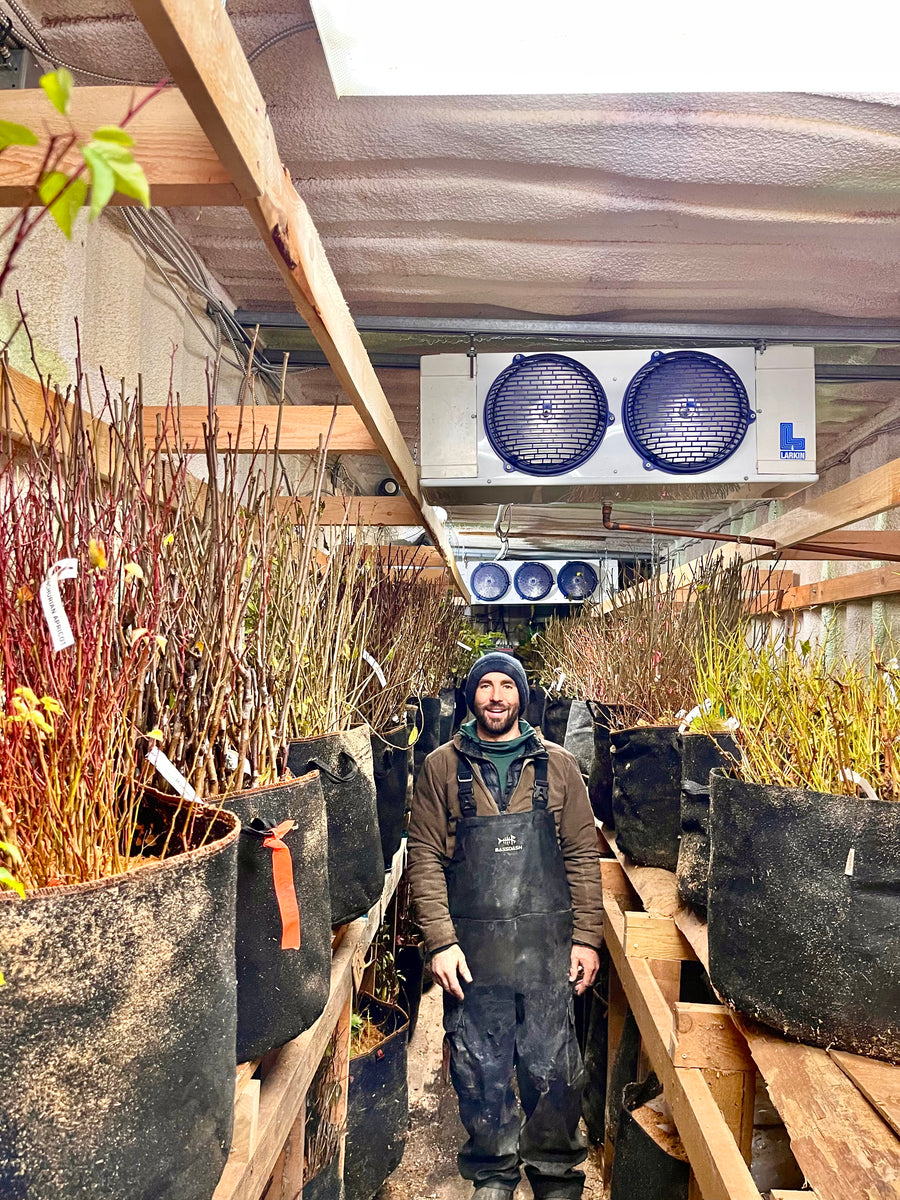
Keep dormant plants in a cool, protected place with their roots in the moist packing material while you arrange a workable holding spot. Check the packing rather than assuming it will stay damp. Avoid a heated room or sunny shed that encourages early leaf growth. Do not leave roots soaking in a bucket for the whole waiting period. Iowa State’s pre-planting storage advice
If you cannot provide suitable cool storage, contact us promptly about your situation. A warm apartment, frozen outdoor soil and a tree beginning to leaf need a different plan from a dormant tree waiting a few days in a cool cellar.
Move them before temporary storage becomes a growing bed
Check the buds as well as the soil. Once new leaves and roots are developing, plants need room and regular growing-season care. Do not leave them bundled together in a trench all summer.
When the final site is ready, loosen the soil carefully and lift each plant without tugging on the stem. Protect the roots from drying and follow From Arrival to Establishment for planting depth, watering and mulch.
If the final site will not be ready this season, use a proper temporary nursery bed instead. Space plants for active growth, keep the planting labelled and weeded, and plan to move them when dormant. This fits our preference for getting perennial plants into the ground rather than holding them in small pots.