
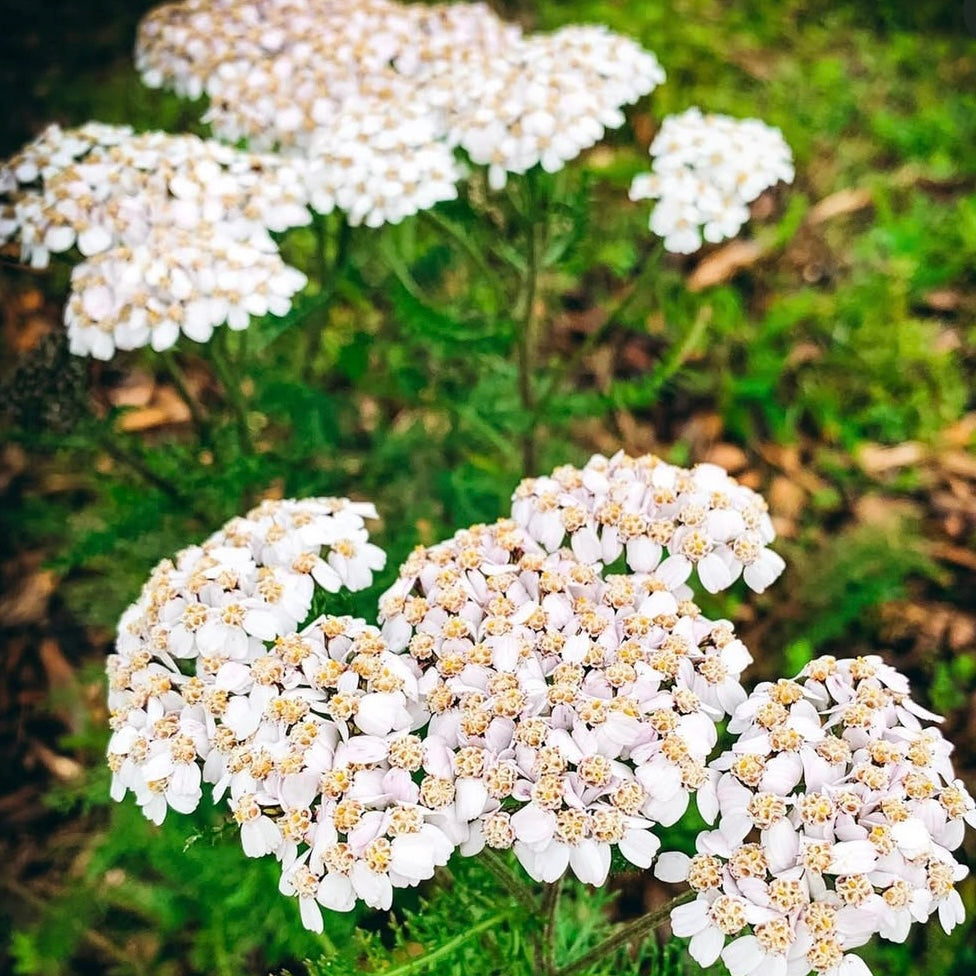

Yarrow (Achillea millefolium) Root Division
Couldn't load pickup availability
Why We Grow It
Why We Grow It
We grow yarrow for its exceptional pollinator support, rugged adaptability, and usefulness in regenerative planting systems. It's also an important fertilizer input too in our fermented plant juices. It thrives where many ornamentals fail, enriches habitat, and adds structure and long-lasting blooms to food forests and wildflower plantings. As a tough, beautiful, and multifunctional perennial, yarrow is one of the most reliable foundation plants for northern homesteads and ecological gardens.
How the Plant Grows
How the Plant Grows
Yarrow forms a perennial clump of finely divided, aromatic foliage that emerges early in spring. Upright flowering stems rise through summer, producing flat-topped clusters of white blossoms that persist for weeks. It spreads slowly through shallow rhizomes, creating a durable, drought-resistant carpet that rebounds well after foot traffic or trimming. In fall, the plant dies back to its crown and returns vigorously the following year.
Plant Size
Plant Size
Size at Maturity- 1–3 ft tall, 1–2 ft wide
Current Size- root crown or root cutting
Additional Info
Additional Info
A native North American wildflower known for its long bloom period and strong ecological value. Yarrow supports a wide array of beneficial insects and is often used in meadow plantings, orchard understories, and low-input landscapes. Its deep roots help stabilize soil and improve structure over time. Spreads gently by rhizomes, forming attractive clumps or groundcover patches.
Yarrow (Achillea millefolium) is a hardy, drought-tolerant perennial valued for its long season of pollinator-friendly blooms, strong adaptability, and usefulness in regenerative landscapes. With finely textured foliage and clusters of white flower heads, yarrow adds visual brightness while attracting bees, butterflies, and beneficial insects. Thriving in poor, dry, or disturbed soils, it’s a resilient and reliable plant for food forests, wildflower meadows, pathways, and low-maintenance garden designs.
Share

Plant Highlights
-
Water
Low; highly drought tolerant once established
-
Pollination
Not applicable; flowers attract a wide range of pollinators
-
Soil
Thrives in sandy, rocky, and well-drained soils. Tolerates clay and marginal soils. Avoid consistently wet locations.
-
Years to Bear
Harvestable in the first year
-
Hardiness
Zone 2–9 (–45°C to –7°C)
-
Solar
Full sun preferred; tolerates light shade
Subscribe to our emails
Lots of Free Growing Info. Be the first to know about new plants and exclusive discounts.