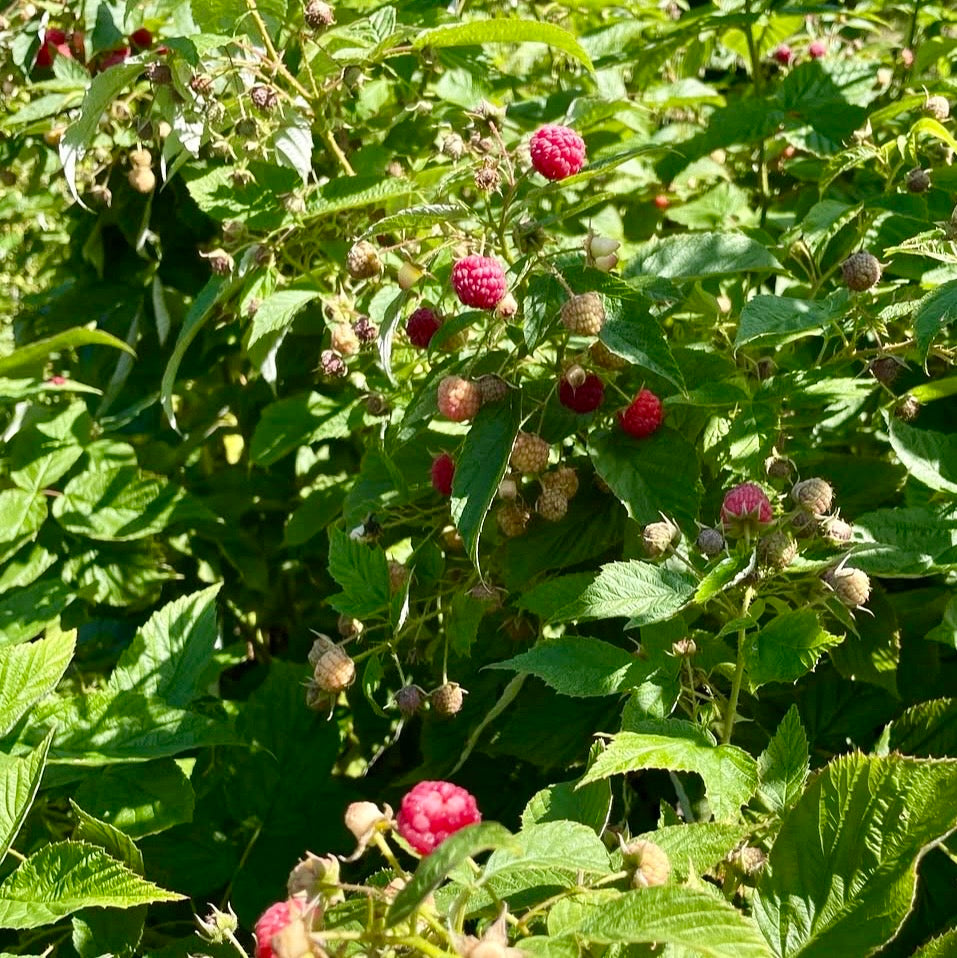
Spreading Red Raspberry
Cultivar & Origin
Spreading red raspberry is offered as root divisions. The patch produces a summer crop on second-year canes and a smaller autumn crop on new canes.
Couldn't load pickup availability
Why We Grow It
Why We Grow It
Its spreading patch fits a sunny guild edge, adding fruit and leaf material while occupying exposed ground. We grow this raspberry partly because it spreads readily into areas where other crops struggle to establish. Underground runners help it colonize rough garden edges and form a productive patch with relatively little planting material. The berries supply fresh fruit and preserves, while leaves and cut canes provide other useful material. Give it a defined area and manage runners where it meets other crops.
How the Plant Grows
How the Plant Grows
Red raspberry sends up vigorous primocanes each spring, which fruit in late summer or fall and then overwinter to produce a heavy floricane crop the following summer. Underground rhizomes spread outward quickly, expanding the patch naturally. The plant produces a dense canopy of nutrient-rich leaves, which can be harvested sustainably throughout the season. After frost, canes are pruned to manage growth and support next year’s flush. The plant thrives in cold climates and rebounds strongly each year.

Plant Size
Plant Size
Size at Maturity- 4–6 ft tall, spreading patch (aggressive via underground runners)
Current Size- 2 canes with viable eyes
Additional Info
Additional Info
The patch produces a summer crop on second-year canes and a smaller autumn crop on new canes. Leaves can be dried for tea. Leaf growth gathers nutrients from the soil, and returning cut foliage as mulch or compost recycles them within the planting. Remove spent fruiting canes and manage runners where the patch meets other crops.
Share

Plant Highlights
-
Water
Moderate; needs steady moisture during fruiting for best berry size and texture
-
Pollination
Self-pollinating; no companion varieties required
-
Soil
Prefers fertile, well-drained loam; tolerates sandy or clay soils if well amended; avoid waterlogged sites
-
Years to Bear
Fruits in the first and second year (primocane and floricane bearing)
-
Hardiness
Zone 3–8 (–40°C to –12°C)
-
Solar
Full sun; tolerates afternoon shade
Subscribe to our emails
Lots of Free Growing Info. Be the first to know about new plants and exclusive discounts.