
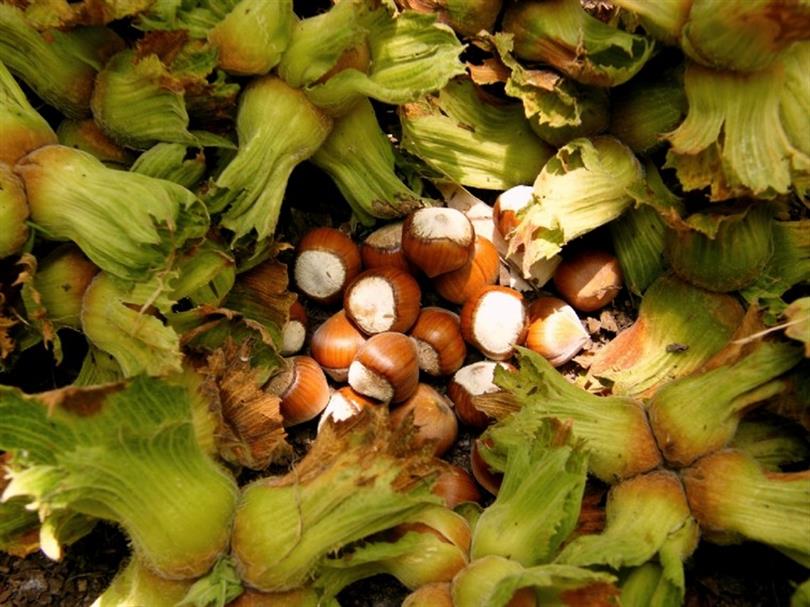

Hazelnut 'Gellatly' Seedling
Cultivar & Origin
Our Gellatly hazel material comes from a breeding heritage combining European, North American and Turkish tree-hazel ancestry. Gellatly selections include Manoka, associated with beaked and European hazel, and Faroka, associated with Turkish tree-hazel breeding. This batch is raised from seed rather than assigned to one of those individual clones. Nut characteristics and tree form provide traits for continued selection.
Couldn't load pickup availability
Why We Grow It
Why We Grow It
Gellatly’s hazel breeding brought together European hazel, native beaked hazel and Turkish tree hazel. Selections such as Manoka and Faroka represent different parts of that work. Growing seedlings from this diverse heritage gives us a productive hedge and new material to select, carrying a long Okanagan breeding tradition into another generation.
How the Plant Grows
How the Plant Grows
Hybrid Hazelnuts grow as bushy, multi-stemmed shrubs with rounded canopies. They leaf out in spring with bright green foliage, followed by inconspicuous yellowish catkins in early spring, which are the male flowers. Female flowers are small and red, leading to nut clusters that mature in late summer to early fall. Over the years, they establish deep roots, improving drought tolerance and contributing to soil stability.
Plant Size
Plant Size
Size at Maturity- Shrub Layer. Typically grows to 8–15 ft tall with a similar spread. Large bushes can get upwards of 20 ft and can be pruned back for easier harvesting.
Current Size-
Additional Info
Additional Info
Commercial hazelnuts are widely grown in Turkey, Italy and Oregon. Orchard harvesters collect fallen nuts from the ground, making hazels an established example of a perennial food crop suited to mechanized farm production. The same shrubs also supply shelter and flexible wood.
Gellatly
Hazelnuts are among the quickest nut crops to begin producing. Beyond the nuts, their flexible stems can provide stakes and weaving material, and the shrubs form useful shelter and habitat along edges. Managed as coppice or a mixed hedge, they contribute structure during succession while supplying a storable food and oil crop.Share

Plant Highlights
-
Water
Requires consistent moisture during establishment and nut development; drought-tolerant once mature
-
Pollination
Wind-pollinated; planting multiple shrubs is necessary for nut production.
-
Soil
Adaptable to various soil types; thrives in well-drained, fertile soils with a neutral to slightly acidic pH (6.0-7.0)
-
Years to Bear
Produces nuts within 3-5 years of planting
-
Hardiness
Zone 3/4, tolerating temperatures as low as -45° depending on the specimen.
-
Solar
Prefers full sun but tolerates partial shade; sunnier conditions improve nut yields.
Subscribe to our emails
Lots of Free Growing Info. Be the first to know about new plants and exclusive discounts.