Skip to product information
1 of 4

Elderberry 'Marge' (Sambucus canadensis)

Elderberry 'Marge' (Sambucus canadensis)

Regular price $22.00 CAD
Regular price Sale price $22.00 CAD
Sale Sold out
Shipping calculated at checkout.
Size

Special Offers

Mix and Match Elderberry Bundle 20% Off
$110.00 CAD
$88.00 CAD
Choose your Elderberry (Bundly)
Elderberry Cultivar Bundle
 × 5

Why We Grow It

Elderberries are a powerful addition to food forests and integrated perennial plantings. They support pollinators with their prolific summer blooms and provide food for birds and other wildlife. Their rapid growth and coppicing potential make them an excellent source of biomass for mulch or compost, contributing to soil health. As a dual-purpose plant offering both ornamental and practical benefits, elderberries enrich biodiversity and provide high-value products for human use, making them a must-have for sustainable systems.

How the Plant Grows

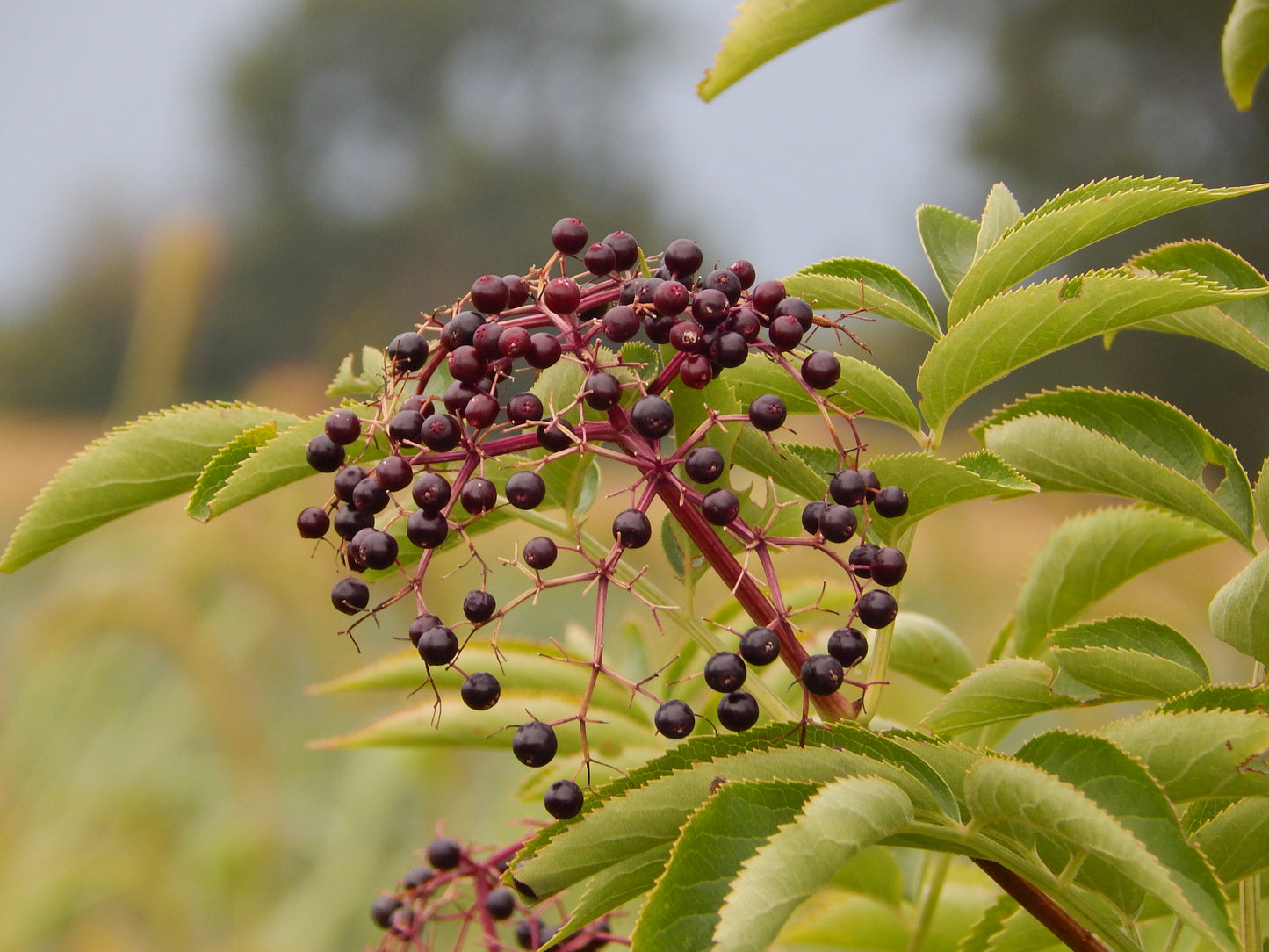
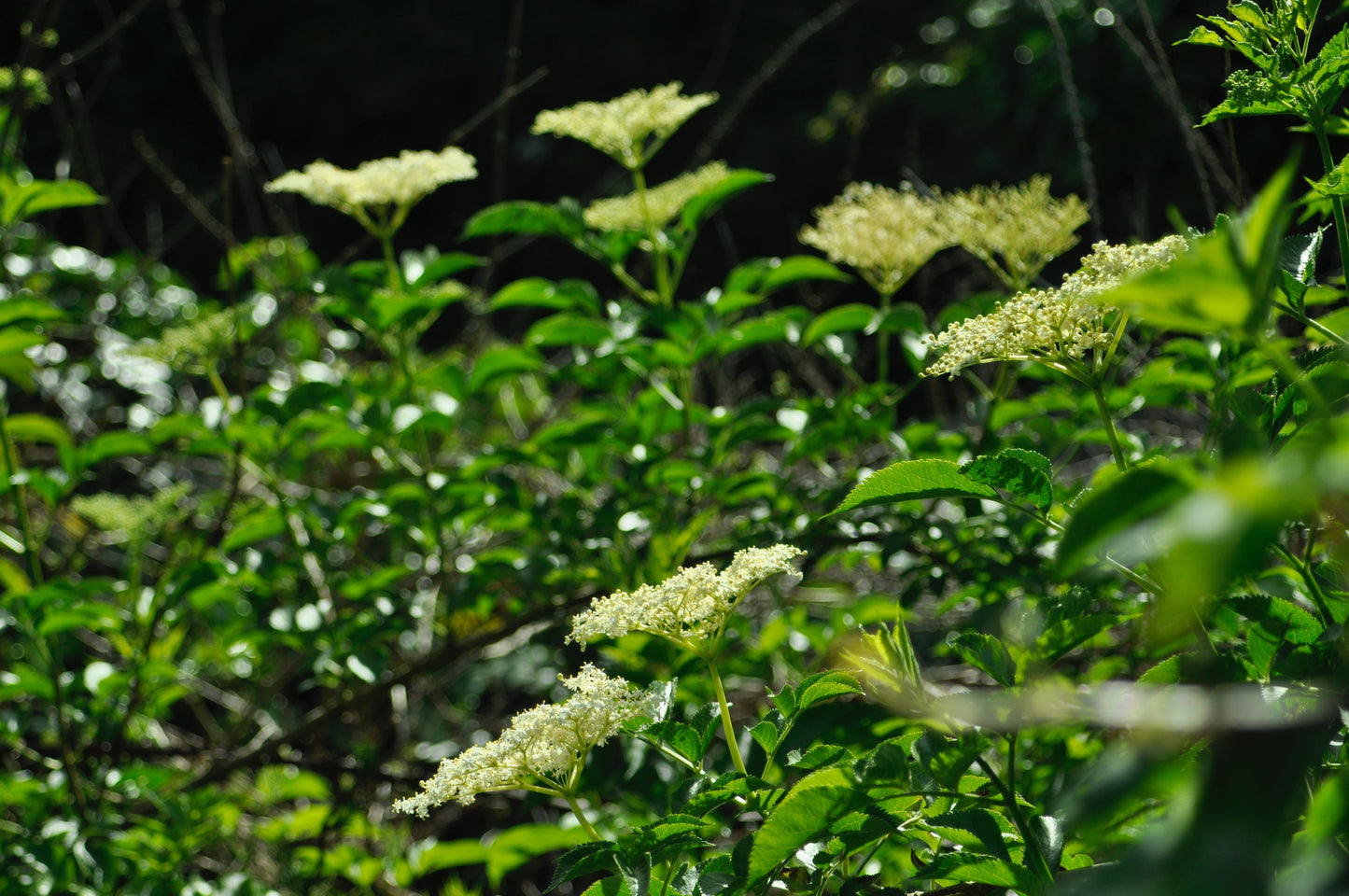
The coppice king! Elderberries grow rapidly, producing dense, bushy shrubs with pinnate green leaves. In late spring to early summer, they bloom with large, fragrant flower heads that attract bees and other pollinators. By late summer, these flowers develop into clusters of small, dark purple to black berries. Elderberries respond well to coppicing, which can rejuvenate older plants and provide a sustainable source of biomass. They thrive in moist, nutrient-rich soils but are remarkably adaptable, growing in a variety of conditions, including wet or marginal areas.

Plant Size

Size at Maturity- Shrub/Midstory Layer. Grows to 8-20 feet tall and 6-10 feet wide, with rapid annual growth

Current Size- Rooted cuttings. Cut back to fit into package. Up to 18" tall with robust roots.

Additional Info

Elderberries have been used for centuries in traditional medicine and as a food source. Their berries are rich in antioxidants and are a staple for making syrups, jams, wines, and immune-boosting remedies. The flowers are also edible and can be used to make elderflower cordial or tea. Beyond their culinary and medicinal uses, elderberry stems, which have a soft pith, are traditionally used for crafting small instruments or taps for syrup collection. These shrubs attract birds and pollinators, making them an essential element for enhancing garden biodiversity. Coppicing elderberries for biomass is another sustainable practice, providing material for mulch or compost while encouraging vigorous new growth.

Elderberries are fast-growing, multi-functional shrubs that bring fast growing biodiversity, and utility to gardens and food forests. Known for their large, showy flower heads in summer and clusters of dark, flavorful berries in late summer to fall, elderberries are highly valued for their culinary and medicinal uses. These hardy plants thrive in a variety of climates and are a cornerstone for ecological and permaculture designs, offering benefits to both humans and wildlife.

Variety info

MargeMarge, a seedling of Haschburg (Sambucus nigra), stands out for its productivity on second-year wood, showcasing numerous small berries and a high resistance to eriophyid mites. It uniquely adapts well to various North American climates, proving successful for commercial growers in regions with hot summers and cold winters. Its distinctive traits suggest it may be a hybrid with S. canadensis.

View full details
  • Water

    Prefers consistent moisture, especially during establishment and berry production, though it can tolerate occasional wet conditions

  • Pollination

    Partially self-fertile but benefits from cross-pollination between multiple varieties for improved fruit yield

  • Soil

    Thrives in rich, moist, well-drained soils but is adaptable to a range of soil types. Known to grow in poor soils as well.

  • Years to Bear

    Produces flowers and berries as early as 2-3 years after planting. Most of our rooted cuttings had flowers and fruit on them that we pull off.

  • Hardiness

    Zones 3-9, tolerating temperatures as low as -35°C (-31°F)

  • Solar

    Prefers full sun, though it can tolerate partial shade; best fruit production occurs in full sunlight.