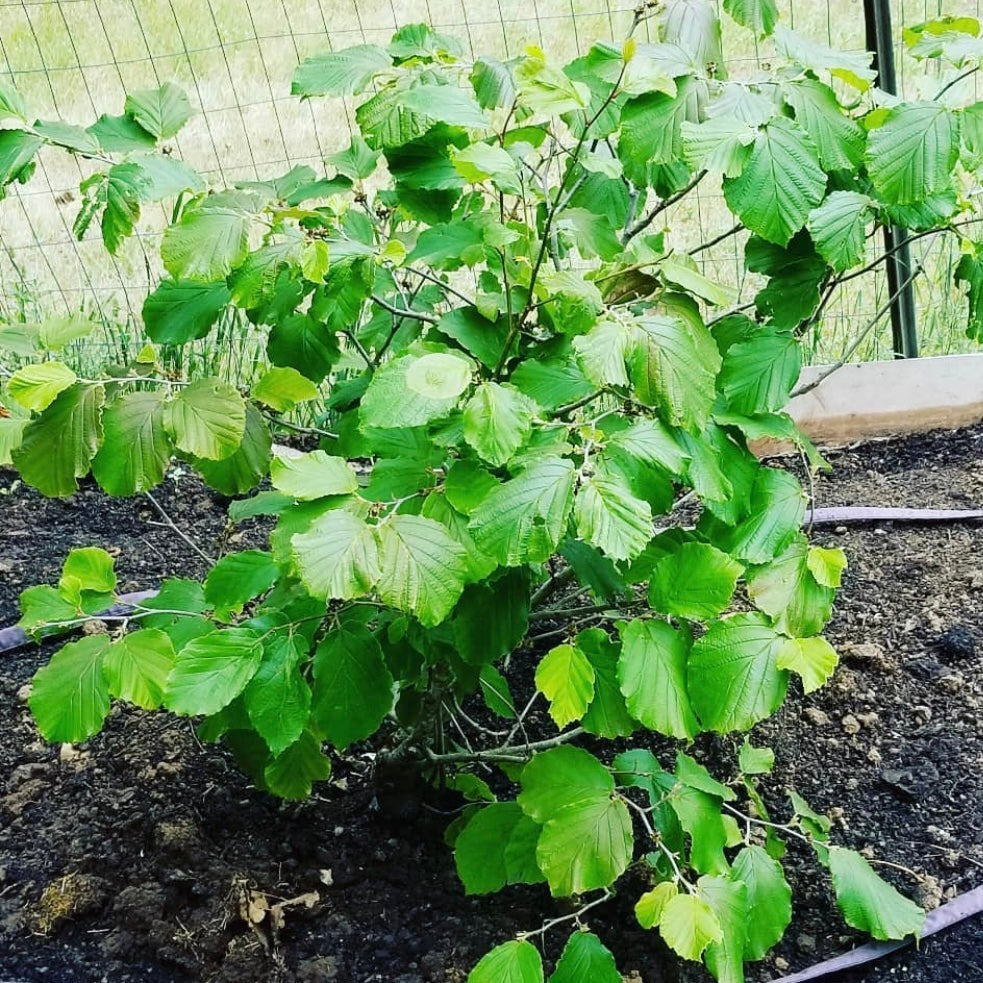
Witch Hazel (Hamamelis virginiana)
Impossible de charger la disponibilité du service de retrait
Pourquoi nous le cultivons
We grow witch hazel for its unique late-season blooms, medicinal value, and excellent performance in northern climates. Its ability to flower after frost adds rare beauty and ecological benefit to fall and early winter landscapes. As a native species, it supports local wildlife and fits seamlessly into food forests, woodland plantings, and regenerative designs. With its historical use as a natural astringent and its durable, low-maintenance nature, witch hazel is a multifunctional shrub that brings structure, resilience, and year-round interest to cold-climate plantings.

Comment pousse la plante
Witch hazel grows as a multi-stemmed shrub with an upright, spreading form and smooth gray bark. It leafs out early in spring and drops its leaves in late fall, revealing bright yellow, spidery flowers that appear on bare branches at a time when nearly all other plants are dormant. Growth is slow to moderate, and the plant adapts well to woodland edges, understory plantings, and partial-shade environments. Once established, witch hazel is long-lived, resilient, and tolerant of challenging soils.
Taille de la plante
Taille de la plante
Taille à maturité 10–20 ft tall, 8–12 ft wide
Taille actuelle 2 year old seedling 10"-20" tall
Informations complémentaires
Native to eastern North America; traditionally used for its medicinal bark and twigs, which are distilled into natural astringent extracts. Known for very late-season flowering—often October to December—making it a rare source of nectar for late-flying pollinators.
Witch hazel is a hardy, multi-stemmed native shrub valued for its late-season yellow blooms, strong medicinal qualities, and reliable performance in cold climates. Flowering in late fall—often after all other plants have gone dormant—witch hazel brings bright, fragrant ribbon-like blossoms to the landscape when little else is blooming. As a resilient, shade-tolerant understory shrub, it thrives in northern forests and diverse planting systems. Long used in traditional medicine for its astringent bark and twigs, witch hazel remains a highly multifunctional plant for ecological landscapes, herbal growers, and cold-climate homesteads.
Partager

Points forts de la plante
-
Eau
Moderate; prefers consistent moisture but is drought-tolerant once established
-
Pollinisation
Self-fertile; does not require another plant for flowering or seed set
-
Sol
Prefers loamy, moist, well-drained soil; tolerates clay, rocky soils, and acidic forest soils; avoids prolonged waterlogging
-
Des années à supporter
4–6 years to first bloom
-
Rusticité
Zone 3–8 (–40°C to –12°C)
-
Solaire
Full sun to partial shade; tolerates significant shade but flowers best with some sun
Abonnez-vous à nos emails
De nombreuses informations gratuites sur la culture des plantes. Soyez le premier à être informé des nouvelles plantes et des remises exclusives.