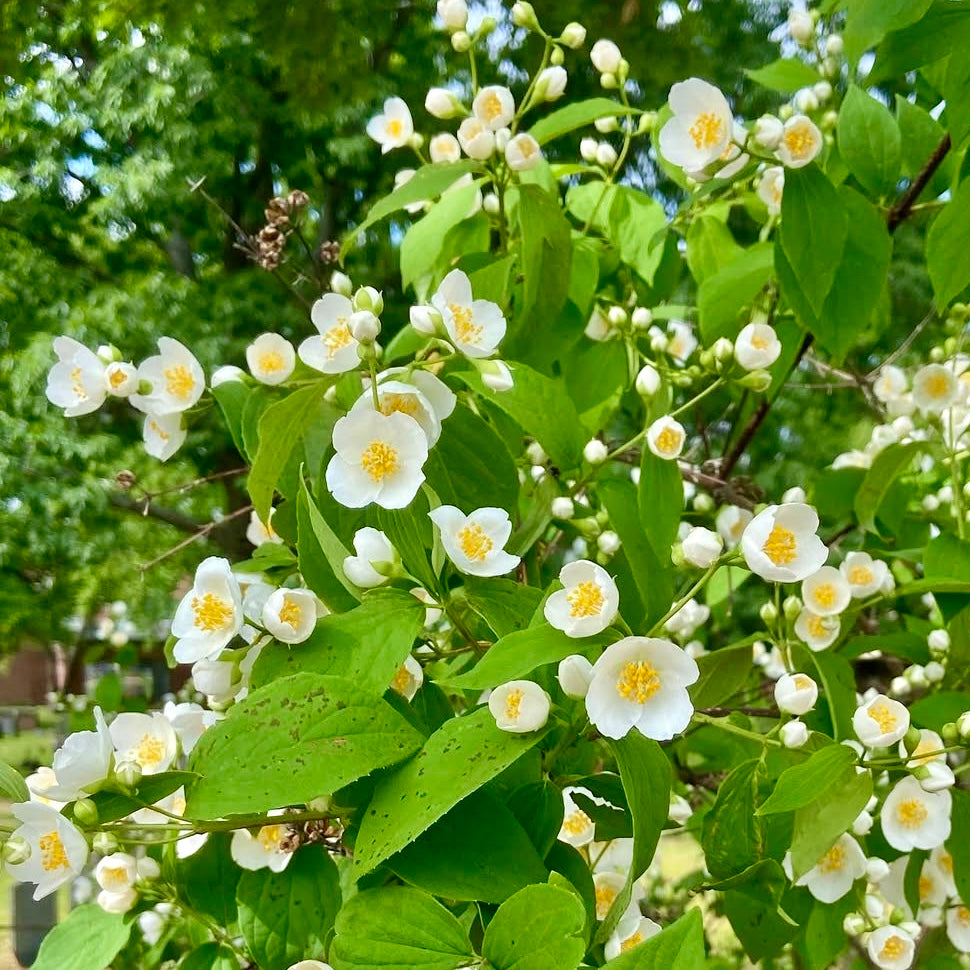
Mock Orange (Philadelphus lewisii)
Impossible de charger la disponibilité du service de retrait
Pourquoi nous le cultivons
We grow Mock Orange because it offers exceptional fragrance, remarkable hardiness, and strong ecological value with almost no maintenance. Its ability to thrive in dry soils, cold winters, and exposed sites makes it a highly reliable ornamental shrub for northern growers. The spring blooms are among the most fragrant of any hardy shrub, drawing in pollinators and adding beauty to food forests, homestead landscapes, and traditional gardens alike. With toughness, adaptability, and unforgettable flowers, Mock Orange is a must-have for cold-climate plantings.

Comment pousse la plante
Mock Orange grows into a vase-shaped, multi-stemmed shrub with arching branches and medium-green foliage. Growth is moderate, with the plant forming a dense clump over time. It flowers on old wood, producing heavy clusters of white, citrus-scented blossoms that last several weeks. The shrub tolerates drought, poor soils, and challenging conditions, making it a rugged choice for naturalized plantings, borders, and hedgerows. Light pruning after flowering maintains shape and encourages fuller blooming the following year.
Taille de la plante
Taille de la plante
Taille à maturité 6–12 ft tall, 4–8 ft wide
Taille actuelle 2 year old seedling 12"-20" tall
Informations complémentaires
Native to western North America; historically valued by Indigenous peoples for tools, fragrance, and aesthetic plantings. Loved by bees and pollinators when in bloom. Known for dense clusters of sweetly citrus-scented white flowers in late spring to early summer.
Witch hazel is a hardy, multi-stemmed native shrub valued for its late-season yellow blooms, strong medicinal qualities, and reliable performance in cold climates. Flowering in late fall—often after all other plants have gone dormant—witch hazel brings bright, fragrant ribbon-like blossoms to the landscape when little else is blooming. As a resilient, shade-tolerant understory shrub, it thrives in northern forests and diverse planting systems. Long used in traditional medicine for its astringent bark and twigs, witch hazel remains a highly multifunctional plant for ecological landscapes, herbal growers, and cold-climate homesteads.
Partager

Points forts de la plante
-
Eau
Low to moderate; very drought tolerant once established
-
Pollinisation
Self-fertile; does not require another plant for flowering or seed set
-
Sol
Adapts to most soil types, including clay, gravel, rocky slopes, and sandy loam; prefers well-drained soils and avoids waterlogged sites
-
Des années à supporter
2–4 years to first full blooms
-
Rusticité
Zone 3–8 (–40°C to –12°C)
-
Solaire
Full sun to partial shade. (Best flowering occurs in full sun)
Abonnez-vous à nos emails
De nombreuses informations gratuites sur la culture des plantes. Soyez le premier à être informé des nouvelles plantes et des remises exclusives.