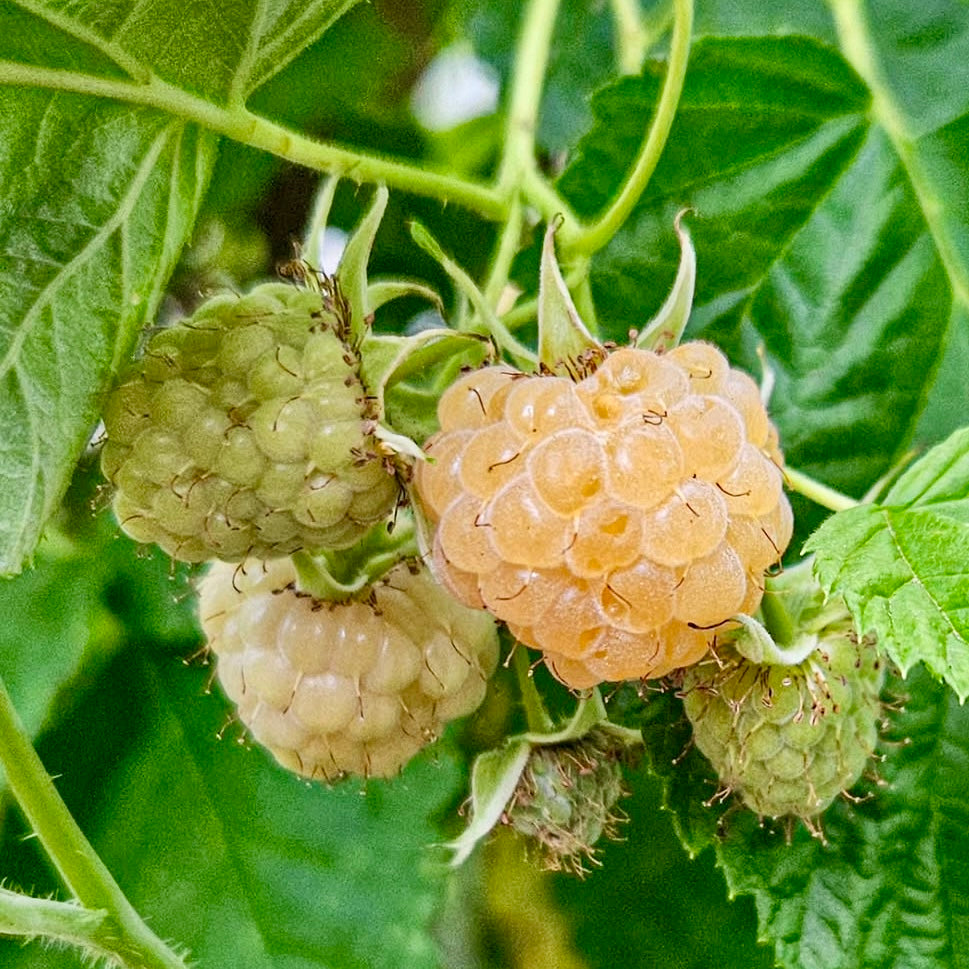
Golden Anne Raspberry
Impossible de charger la disponibilité du service de retrait
Pourquoi nous le cultivons
We grow Golden Anne for its outstanding flavor, dependable fall harvests, and reliable cold performance. Its primocane habit makes it one of the easiest raspberries to manage—simply prune to the ground each winter for a clean, productive patch every year. The golden berries add visual appeal and exceptional sweetness, making them ideal for fresh eating, desserts, preserves, and kids’ snacks. For growers looking for a premium yellow raspberry that performs beautifully in northern climates, Golden Anne is a top choice.

Comment pousse la plante
Golden Anne produces vigorous primocanes that emerge in spring and fruit in late summer through fall. Canes have excellent hardiness and are easy to manage with a simple “cut to the ground” winter pruning for fall-only production. The plant forms a well-organized clump with moderate suckering, making it easier to contain than older raspberry varieties. Berries are large, soft-gold, and extremely sweet with a smooth texture and mild floral notes.
Taille de la plante
Taille de la plante
Taille à maturité 4–6 ft tall, 2–3 ft wide
Taille actuelle 2 canes with viable eyes
Informations complémentaires
Released by Cornell University as part of their bramble breeding program; prized for its large, sweet, golden berries and superior cold-climate performance. Ripens in late summer through fall on primocanes (first-year canes), extending the raspberry season.
Golden Anne is a large-fruited, intensely sweet yellow fall-bearing raspberry known for exceptional flavor, excellent cold hardiness, and reliable production in northern climates. Bred at Cornell University as an improved, more vigorous alternative to older yellow raspberries, Golden Anne offers big, soft-gold berries with a rich, honeyed taste and strong fruity aroma. As a primocane (fall-bearing) raspberry, it fruits on first-year canes, making it easy to manage with a single annual pruning and ensuring consistent, late-season harvests even in short-season climates.
Partager

Points forts de la plante
-
Eau
Moderate; needs steady moisture during fruiting for best berry size and texture
-
Pollinisation
Self-pollinating; no companion varieties required
-
Sol
Prefers fertile, well-drained loam; tolerates sandy or clay soils if well amended; avoid waterlogged sites
-
Des années à supporter
Fruits in the first year
-
Rusticité
Zone 4–8 (–34°C to –12°C)
-
Solaire
Full sun; tolerates afternoon shade
Abonnez-vous à nos emails
De nombreuses informations gratuites sur la culture des plantes. Soyez le premier à être informé des nouvelles plantes et des remises exclusives.