
Passer aux informations produits
1 de 2

Chestnut 'RJ' Seedling

Chestnut 'RJ' Seedling

Cultivar & Origin

RJ is a seed line developed through several generations of selection beyond Gellatly mother stock in Lake Country, on the shores of Okanagan Lake. The source trees are selected for productive crops and large nuts, reaching 28 grams in some years. Gellatly trees contribute pollen in the source planting. The batch is raised from seed collected from those selected trees.

Plant highlights
Prix habituel $0.00 CAD
Prix habituel Prix promotionnel $0.00 CAD
En vente Épuisé
Frais d'expédition calculés à l'étape de paiement.
Size

Pourquoi nous le cultivons

RJ continues several generations of selection beyond Gellatly mother stock, developed in Lake Country on the shores of Okanagan Lake. The source trees have produced nuts reaching 28 grams in some years. We grow this line to keep selecting for a substantial food crop from productive, locally established trees.

Comment pousse la plante

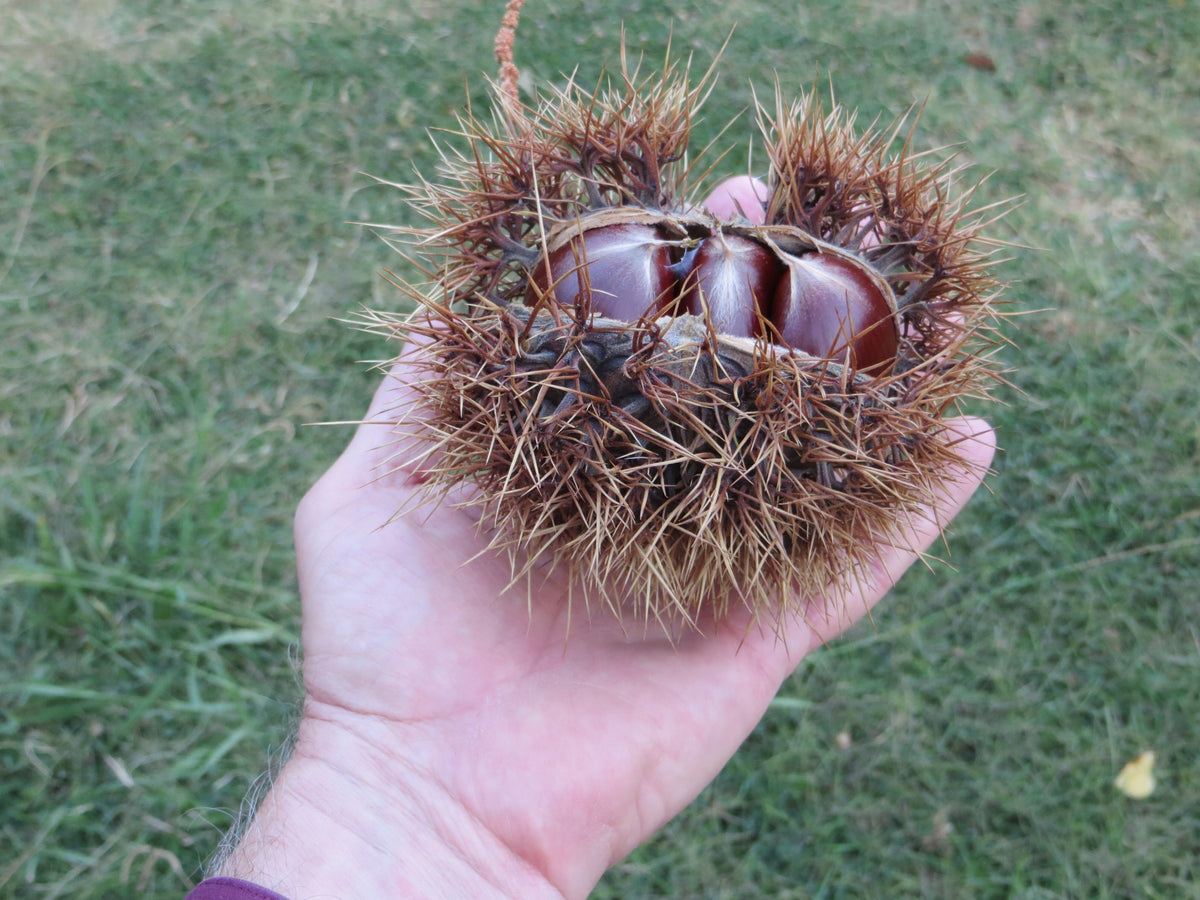
Chestnuts develop a broad crown and need a sunny, well-drained permanent site. Summer catkins are followed by spiny burrs; keep the ground beneath them accessible for autumn collection.

Taille de la plante

Taille à maturité Canopy Layer. Grows to 50–65 ft tall with a spread of 30+ ft, depending on the species and growing conditions.

Taille actuelle

Informations complémentaires

Chestnuts are major cultivated food crops in East Asia and parts of Europe. Ground collection and mechanical pickup are used in commercial orchards, making chestnuts relevant to farm-scale agroforestry. Fresh nuts are perishable; drying provides a route to stored kernels and flour.

RJ — Next Generation Gellatly seedling origin

Chestnut has been called the bread tree: a source of starchy nuts that can form part of a staple diet. Across European and Asian cultures, chestnuts have supplied flour, cooked meals and winter food. They also have potential in silvopasture, combining a canopy crop with managed grazing beneath established trees.
Afficher tous les détails
  • Eau

    Needs regular watering during establishment and the growing season for healthy nut development. Mature trees exhibit moderate drought tolerance

  • Pollinisation

    Monoecious but requires at least two trees for cross-pollination. Plant trees 25 feet apart or closer for effective pollination.

  • Sol

    Thrives in well-drained, loamy soils; prefers slightly acidic to neutral pH levels (4.5-7.0). We've seen trees in clay, silty and other mixed soil types. Very adaptable overall to soil type.

  • Des années à supporter

    Begins producing nuts at 5-10 years from planting, with increasing yields as the tree matures

  • Rusticité

    Zones 4-9, tolerating temperatures as low as -34°C (-30°F)

  • Solaire

    Requires full sun for optimal nut production; tolerates light shade but with reduced yield.