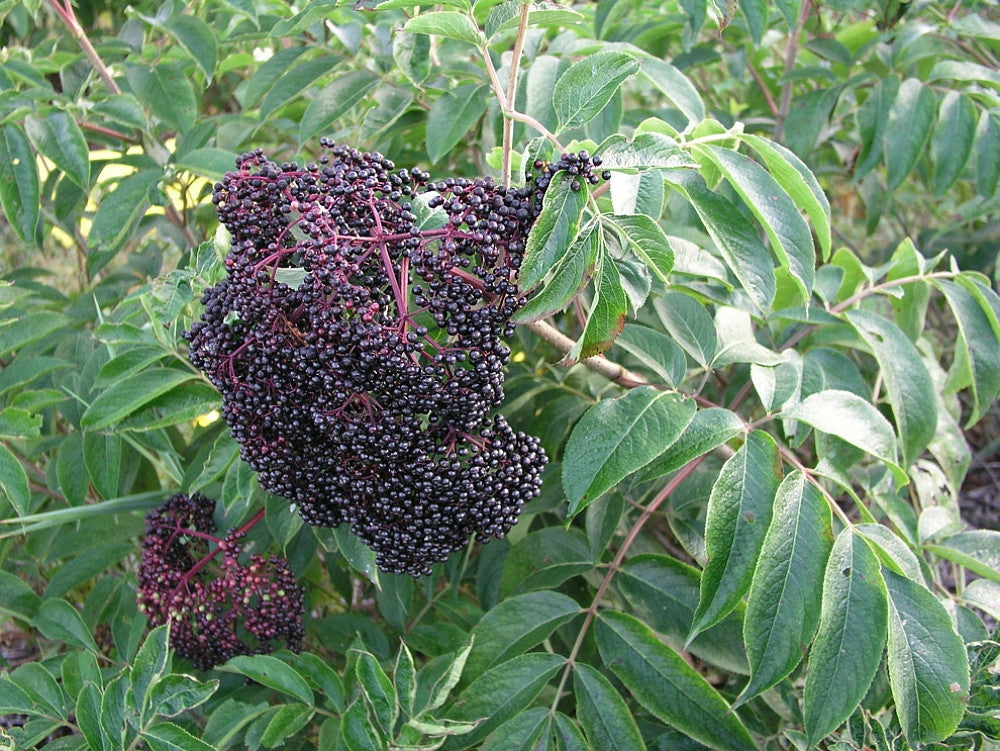
Canadian Elderberry 'Wyldewood'
Cultivar & Origin
Wyldewood was selected near Eufaula, Oklahoma and evaluated in Missouri. It is a vigorous, productive elderberry with fruit in substantial clusters, useful for juice, syrup and preserves. Its strong growth suits a managed berry row or a productive mixed hedge.
Impossible de charger la disponibilité du service de retrait
Pourquoi nous le cultivons
Elderberries turn a moist garden edge into a useful harvest for preserves and syrups. They also provide seasonal flowers, cover and fruit for wildlife, with a manageable place in a mixed shrub planting.
Comment pousse la plante
The coppice king! Elderberries grow rapidly, producing dense, bushy shrubs with pinnate green leaves. In late spring to early summer, they bloom with large, fragrant flower heads that attract bees and other pollinators. By late summer, these flowers develop into clusters of small, dark purple to black berries. Elderberries respond well to coppicing, which can rejuvenate older plants and provide a sustainable source of biomass. They thrive in moist, nutrient-rich soils but are remarkably adaptable, growing in a variety of conditions, including wet or marginal areas. Supplied with robust roots; tops may be cut back for packaging.

Taille de la plante
Taille de la plante
Taille à maturité Shrub/Midstory Layer. Grows to 8–20 ft tall and 6–10 ft wide, with rapid annual growth
Taille actuelle
Informations complémentaires
Use fully ripe elderberries in cooked preparations such as preserves and syrups. Remove stems and unripe fruit. Flowers can be used in suitable recipes; leaves and stems are not food.
Wyldewood
Elderberries are fast-growing shrubs of moist edges and disturbed ground. They help establish cover during ecological succession, providing flowers for insects, fruit for birds and leafy shelter as a planting develops. In a food forest or hedge, managed canes supply berries for cooked juice, syrup and preserves.Partager

Points forts de la plante
-
Eau
Prefers consistent moisture, especially during establishment and berry production, though it can tolerate occasional wet conditions
-
Pollinisation
Partially self-fertile but benefits from cross-pollination between multiple varieties for improved fruit yield
-
Sol
Thrives in rich, moist, well-drained soils but is adaptable to a range of soil types. Known to grow in poor soils as well.
-
Des années à supporter
Produces flowers and berries as early as 2-3 years after planting. Most of our rooted cuttings had flowers and fruit on them that we pull off.
-
Rusticité
Zones 3-9, tolerating temperatures as low as -45°C
-
Solaire
Prefers full sun, though it can tolerate partial shade; best fruit production occurs in full sunlight.
Abonnez-vous à nos emails
De nombreuses informations gratuites sur la culture des plantes. Soyez le premier à être informé des nouvelles plantes et des remises exclusives.